
Tyler Bretes’ path to engineering wasn’t something he planned from the start. As a kid, he loved video games, LEGO, and tinkering with electronics—fixing phones and playing around with IT projects in his free time. But it wasn’t until his freshman year of high school that everything clicked.
At Concord High School, a group of seniors started a robotics team, and Bretes got involved through his friend’s older brother. At first, he wasn’t sure what to expect, but building a robot sounded like a cool challenge. Their first season was rough—the team was inexperienced, their mentor from Ford did most of the work, and they unknowingly broke a lot of competition rules. Their robot had a terrible autonomous program, and they didn’t perform well at events. Despite all that, something about the experience kept Bretes coming back.
Things changed in his sophomore year when a math teacher took over as coach. This time, the students had to step up and take ownership of their robot. That’s when Bretes started to really enjoy the process. It wasn’t just about competing—it was about solving problems, building things, and working as a team.
By junior year, he met Dr. Lee, a mentor who made a huge impact on his journey. Through Dr. Lee, Bretes was introduced to CAD (computer-aided design) and finally understood how things were built from the ground up. That hands-on experience sealed the deal—he knew engineering was what he wanted to do. After high school, he went to Jackson College and then earned his mechanical engineering degree from Western Michigan University.
FIRST Robotics set the foundation for Bretes’ love of engineering, but his internship experience is what really brought it to life. Working at Conceptual Innovations wasn’t just a job—it was a game changer.
His internship helped him connect what he was learning in school to real-world applications. Suddenly, complex equations and abstract engineering principles made sense because he was actually using them. Instead of just studying concepts, he was applying them to real projects. That hands-on experience gave him a huge advantage in class and helped him create things he was truly proud of.
Beyond the technical skills, the internship gave him confidence in his career path. Seeing his work come to life reinforced why he had chosen engineering. Plus, it opened doors to multiple job offers before he even graduated, setting him up for success.
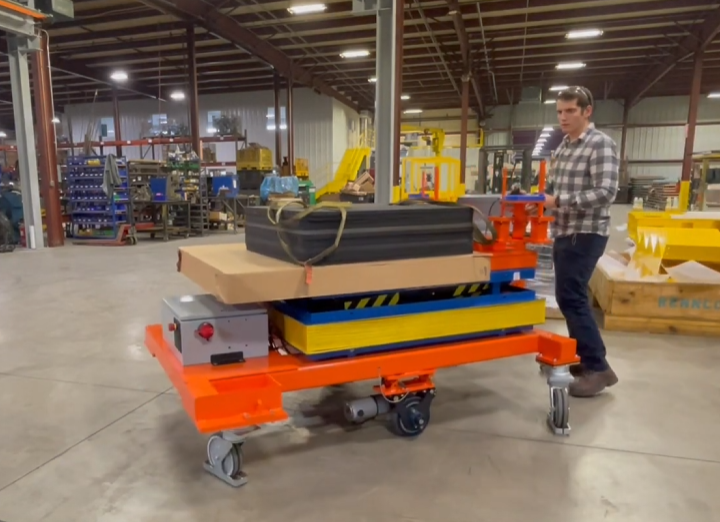
He stresses the importance of trusting good mentors and taking chances. As a student, he once helped build a prototype for an omni-directional drive system under Dr. Lee. At the time, it felt like just another project, but that prototype later became something much bigger. By the time he was 19, his name was on a patent—something that would eventually be used by major companies. If he had dismissed it as just another assignment, he would have missed out on a huge opportunity.
For FIRST students, internships aren’t just about gaining experience—they’re a chance to apply what you’ve learned, meet professionals, and figure out what excites you. Bretes’ story proves that stepping out of your comfort zone, seeking mentorship, and embracing challenges can lead to amazing opportunities.
If you’re a FIRST student thinking about a STEM career, now is the time to start looking for internships. Whether it’s networking, reaching out to mentors, or applying to programs, every step you take now can shape your future. Who knows? The project you’re working on today might be the first step toward something groundbreaking.
This is so cool!
Wow!